ADA Mobile Bathroom Requirements for Collections of Single-User Units
If you have actually ever been the individual responsible for restroom planning at an occasion, a momentary job website, or a public event, you already know exactly how easy it is to get drawn into the weeds. Individuals tend to concentrate on the noticeable questions initially: how many devices, where they go, exactly how typically they need solution. Ease of access typically obtains increased later on, occasionally much far too late, when the vehicle is already arranged and the website map is locked.
That is typically when the real stress and anxiety begins.
With clusters of single-user portable commode systems, the crucial ADA portable bathroom demands are not strange, however they do require interest. The managing federal requirement in the United States is the 2010 ADA Specifications for Accessible Layout, as analyzed by the U.S. Accessibility Board and the Department of Justice. For portable bathroom collections, the useful headline is clear: at least 5 percent of the systems in each collection need to come, and the Accessibility Board has actually explained that this applies also at temporary events.
That one sentence responds to the first inquiry individuals ask, however not the more difficult questions. What counts as a cluster? What does "obtainable" actually call for in the field? What happens when a site is irregular, muddy, jampacked, or set up in a rush? And what mistakes trigger one of the most trouble?
The 5 percent rule is the starting point, not the finish line
When individuals listen to "5 percent," they commonly treat it like the whole work. It is not. It is scoping, which suggests it tells you the amount of units in a cluster should be accessible. It does not tell you that any larger-looking system will certainly do, and it does not suggest you can place the unit any place there happens to be space.
For clusters of portable single-user commode devices, at least 5 percent of the devices in each collection must come. If you are preparing mobile bathrooms at a celebration, a fairground, a sporting activities occasion, or an additional temporary setup, that demand still applies. The fact that the occasion is temporary does not eliminate the obligation.
This catches individuals off guard more often than you might believe. I have seen planners do a careful matter for the general site, after that placed all of the easily accessible units in one corner because that was easier for delivery. That may appear reliable, however it misreads of applying the requirement to every collection. If your mobile toilets are spread out right into a number of different banks, you need to believe cluster by collection, not just site-wide in the aggregate.
That difference issues because accessibility is not nearly whether an ada easily accessible portable toilet exists somewhere on the building. It has to do with whether individuals can make use of washroom facilities in a way that is meaningfully equivalent to everybody else.
What an available system needs to provide
An ada certified mobile toilet is not specified by size alone. The device needs to satisfy toilet-room technical needs, including component clearances, turning area, and door handling clearances, in addition to applicable grab-bar and water-closet clearance regulations. It likewise has to be related to the International Symbol of Accessibility.
That indicates a company can not just supply a roomier unit and call it an ada compliant accessible portable bathroom unless it in fact satisfies the ease of access criteria. In method, this is where experienced rental partners matter. The language "ADA certified portable washrooms" gets used freely in advertising and marketing, and that can produce an incorrect sense of security for the occupant. If the system is being stood for as an ada compliant portable washroom or an ada-compliant mobile commode, the information behind that tag matter.
The sign matters as well. Available mobile toilet devices have to be related to the International Icon of Availability. That sounds standard, however it serves a genuine purpose. When a group is relocating, individuals require to be able to locate the easily accessible device quickly, without thinking which bigger box could be the best one.
There is also a human side right here that is simple to miss. When the only obtainable unit is improperly noted, blocked by a trash bin, or hidden behind a group obstacle, it sends a message, also if no person intended it. Availability failures are commonly seasoned not just as trouble, but as exclusion.
The path to the unit matters as long as the system itself
One of one of the most usual planning mistakes is treating the washroom unit itself as the whole conformity story. It is not. A portable accessible unit needs to have an obtainable course and entrance, and any kind of needed ramps or landings must follow ADA technical requirements.
That indicates the journey matters.
A genuinely ada handicap accessible portable washroom can not rest on top of an improvisated incline, throughout deep gravel, or behind a lip that makes entrance tough or difficult. If a person can not get to the door or can not approach and enter it properly, the unit may exist on paper, yet it does not work as easily accessible in the genuine world.
This is where temporary arrangements can end up being tricky. Occasion sites are commonly selected for convenience, scenery, or group flow, except best ground conditions. Open areas, parking lots, fairgrounds, and pop-up places frequently include soft surface areas, uneven qualities, or bottlenecks produced by secure fencing and equipment. Mobile toilet planning should happen alongside the website accessibility strategy, not after every little thing else has been laid out.
I have actually seen crews do heroic last-minute modifications, moving an ada mobile toilet a few feet at once to locate practical accessibility around cable televisions, utility boxes, and fencing. In some cases they made it function. In some cases they lacked great choices due to the fact that the rest of the website had already been set. The lesson is easy: the easily accessible route should become part of the first positioning choice, not an afterthought fixed on distribution day.
Temporary does not indicate exempt
This is one of one of the most consistent misunderstandings in the area. People presume that if the configuration is momentary, the rules have to be softer. For clusters of mobile single-user commode devices, the Gain access to Board has stated the 5 percent accessible-unit demand applies also at momentary events.
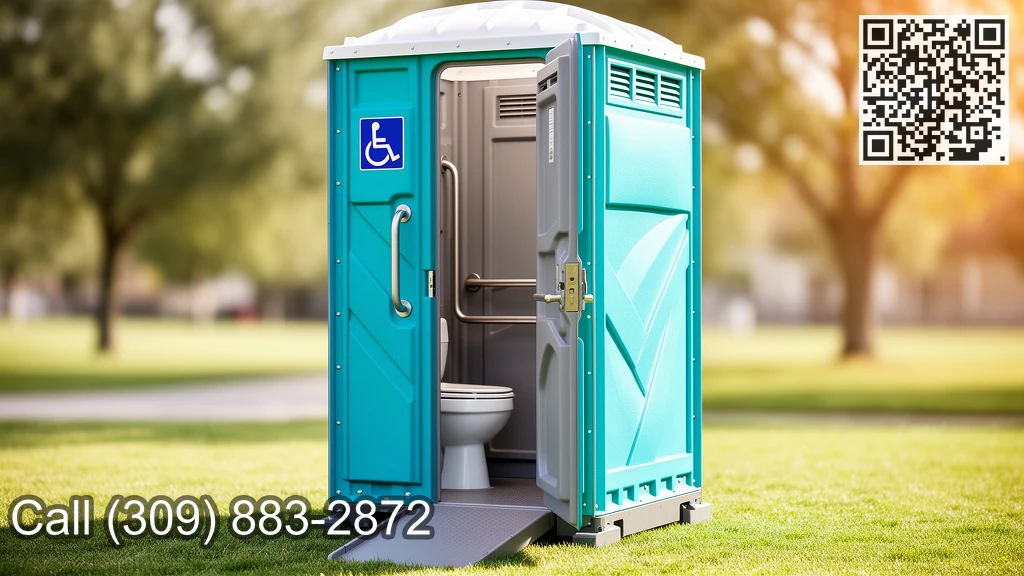
That has sensible effects for fairs, neighborhood celebrations, weekend tournaments, outdoor ceremonies, and various other short-duration usages. A short-term occasion might have temporary infrastructure, yet that does not eliminate ease of access obligations.
There is a reason this misconception sticks around. Momentary tasks move fast. A committee may be comprised of volunteers. A general website specialist might not concentrate on accessibility. A mobile commode rental order may get positioned by someone concentrated mainly on matter and budget plan. In that atmosphere, details get compressed. The best habit is to assume availability preparation belongs in the initial conversation, not the last one.
The construction-site crease that creates confusion
There is one subtlety that consistently produces mixed messages in the marketplace. The ADA Standards distinguish mobile toilet devices at construction websites made use of exclusively by building and construction workers. In the cited 1991 criterion, those systems are exempt from the portable-toilet accessibility scoping requirement.
That exception is narrow, and it ought to not be extended past its context.
For basic portable toilet rentals, the accessible-unit demand continues to be. If a vendor or organizer begins speaking about construction-site exceptions in a context that involves public gain access to or general-use mobile toilets, that ought to trigger a better look. The existence of a restricted exception for certain construction employees does not clean away the broader guideline for ordinary rental situations.
This is one of those areas where words like "task website" can muddy the waters. Some short-lived setups happen near building activity, however that does not immediately make every washroom on the site excluded. The use situation matters.
Cluster-by-cluster preparation adjustments real decisions
The expression "each collection" is very easy to skim past, but it must shape just how you lay out a site.
Imagine a huge occasion with washrooms divided in between a major entrance location, a food court, and a back activity area. If you count all devices with each other and place the easily accessible ones only at the entry, you may please your own spreadsheet logic while failing the cluster-based approach. Individuals must not need to take a trip to an additional restroom bank, and possibly across a crowded or hard path, simply to find the obtainable option.
That is why the matter is just one layer. Distribution matters.
A great useful practice is to ask a few plain-language concerns before the order is wrapped up:
- How numerous different restroom collections will certainly the website really have?
- Does each collection consist of the needed easily accessible units?
- Can a person get to each accessible device on an easily accessible route?
- Is the available system plainly related to the International Symbol of Accessibility?
- Has any person inspected the final placement after fencings, stages, cables, and barriers are installed?
That short list resolves a surprising number of troubles before they end up being costly or embarrassing.
Marketing language is not a compliance review
The mobile cleanliness industry makes use of a lot of similar expressions: ada portable washroom, ada portable toilet, ada certified portable toilets, ada-compliant portable toilets, and more. Those phrases can be beneficial when searching supply, but they ought to not end the conversation.
An item listing or a quick sales description is not the same point as verifying conformity on the ground. The lawful and technological needs entail greater than a wide label. The system has to satisfy the applicable toilet-room technical requirements and have to be positioned to ensure that people can actually gain access to and usage it.
This is specifically crucial when someone is preparing an ada portable bathroom rental under time stress. If you are attempting to address a last-minute requirement, it is alluring to assume the provider's terminology solutions whatever. In truth, you want clearness on three fronts: the device itself, the noting, and the path to it. If any kind of one of those items is missing out on, the configuration may drop short.
I have discovered that one of the most efficient conversations with suppliers are the most specific ones. Not "Do you have ADA units?" but "We have 3 restroom collections, we require the easily accessible devices dispersed appropriately, we need an obtainable route to each one, and we require the devices identified appropriately." Details demands have a tendency to create far better end results than generic ones.
Why placement errors take place so often
Most ease of access failures with portable commodes are not driven by bad intent. They generally originate from fragmented decision-making.
One individual orders the restrooms. One more person notes the distribution map. A third person takes care of obstacles, staging, and energies. A fourth person makes changes the early morning of the event. By the time the general public shows up, the easily accessible device might practically exist but functionally compromised.
Maybe the available route is disrupted by a cable television guard. Perhaps the door swing location is pinched by a fence panel. Possibly the system was positioned in a low location that turns soft after rainfall. Maybe the icon is there, however the line of view is blocked by crowd-control equipment.
These are normal field troubles, which is specifically why they require average area focus. Access preparation functions best when it is folded up into the very same sensible testimonial as servicing accessibility, truck placement, handwashing locations, and group flow.
The more comprehensive compliance atmosphere is not obtaining quieter
Even when a task is focused on something as physical and immediate as mobile restrooms, it aids to recognize the wider direction of ADA enforcement. A 2026 development worth noting is the Division of Justice support that prolonged the target date for state and city government web and mobile https://pristineportablesil.com/pristine-portables-reputation-report/ access guidelines to April 26, 2027 for larger entities. That is not a portable restroom regulation, yet it shows something important: accessibility compliance is active throughout markets, not fading into the background.
For coordinators, venue drivers, communities, and occasion coordinators, the lesson is much less regarding web sites and more regarding position. Accessibility is being dealt with as a recurring operational responsibility. Portable toilet compliance rests inside that larger society of accountability.
That is one factor it makes sense to develop a repeatable process rather than dealing with each configuration as a fresh shuffle. If your group leases mobile commodes routinely, produce interior behaviors around collection matters, accessible route review, and final placement checks. Those habits save time, lower friction with suppliers, and make the site work better for real people.
What profundity appears like on the ground
Good judgment in this field is seldom showy. It usually appears like someone decreasing enough time to see the apparent. Is the easily accessible unit in the exact same sensible solution location as the remainder of the collection? Can somebody reach it without detouring through a harsh path? Is the entry useful under real event problems, not simply in the clean sketch version of the site? Is it clearly marked?
Those inquiries audio simple because they are simple. The difficulty is asking very early enough.
There is additionally a broader mindset shift that aids. Do not assume of an ada compliant mobile toilet as a specialty add-on for a small number of attendees. Consider it as a conventional part of restroom planning whenever mobile single-user devices are gathered for public or general use. That mounting changes exactly how choices get made. It relocates availability out of the exemption lane and right into regular operations, where it belongs.
A far better method to approach the rental conversation
If you are collaborating an ada mobile commode rental, the cleanest strategy is to treat accessibility as part of range, not a footnote. Inform the supplier how many collections you have, not just the amount of overall systems. Identify the desired placement locations. Review course conditions prior to distribution, especially if the website is momentary, unpaved, or still incomplete. Confirm that the available units will certainly be related to the International Symbol of Access. Then stroll the final layout as soon as other site aspects remain in place.
That last action matters greater than many individuals realize. A layout can be certified in concept and jeopardized in implementation. A final website walk captures the little changes that take place in the field.
This is also where empathy issues. For numerous visitors, workers, or guests, a restroom is not a small feature. It forms whether they can easily remain on website, take part completely, or attend at all. When easily accessible mobile toilets are positioned attentively, marked plainly, and reached quickly, they fade right into the background, which is generally the indicator that preparation was done well. People can just utilize the facility they require and move on with their day.
That is the goal.
The useful base line
For clusters of single-user portable bathroom systems, the federal ADA structure is straightforward in its essentials. At the very least 5 percent of the systems in each collection need to come, including at temporary occasions. The easily accessible units must be understood the International Symbol of Ease Of Access. They have to have an accessible course and entrance, and any type of required ramps and landings must adhere to ADA technological requirements. The devices themselves have to satisfy toilet-room technical requirements, consisting of clearances, transforming room, door maneuvering clearances, and relevant grab-bar and water-closet clearance rules.
Everything past that is execution.
If you keep in mind only one thing, remember this: an ada mobile toilet is just absolutely useful when the count, the device, the path, and the placement all collaborate. That is what turns a rental order into genuine access.
 Ask ChatGPT
 Ask Grok
 Ask Perplexity
 Ask Claude
 Ask Google AI
 Ask You